
Plan Your Anthropology Degree
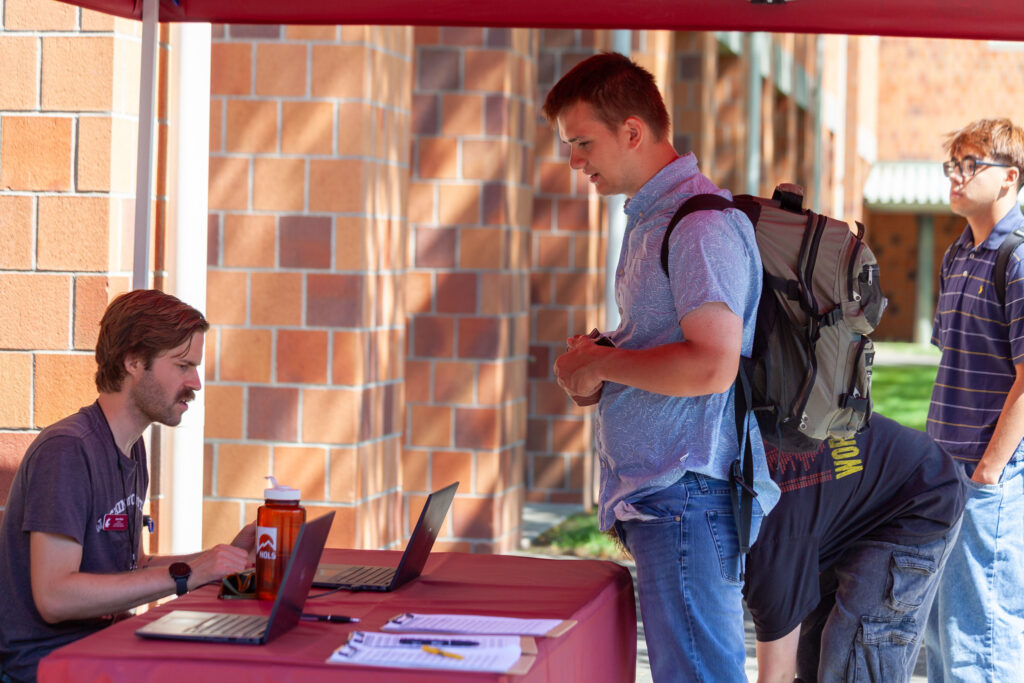
Connect with an academic advisor to discuss major requirements, choose your subdiscipline electives, explore field school opportunities at Fort Vancouver, and map out your path toward graduation.
About the Major
Anthropology is the holistic study of humankind. Anthropologists study the world’s diverse cultures, their prehistory, the relationships between biology and culture, and the impact of language on our perceptions of the world. WSU Vancouver emphasizes a solid foundation across all four subfields to provide students with a versatile, comprehensive understanding of human history and society.
Learning Objectives
At WSU Vancouver, students master scientific concepts, theories, and methods while examining how these frameworks relate to cultural biases. The program instills a deep, systematic appreciation for human diversity at all levels. Curriculum design focuses on the demands of the modern workforce, including international market dynamics, diverse workplaces, participatory decision-making, and advanced communication strategies.
Core Skills Acquired
- Logical, critical, and analytical thinking
- Verbal and written communication
- Statistical and computational analysis
- Data collection, interpretation, and analysis
- Diversity, inclusion, and intercultural communication
Career Fields
Shifts in local and regional economies continue to drive demand for professionals who understand human diversity and work effectively across different cultural backgrounds. Anthropology graduates are well-prepared for entry-level positions in archaeology and various roles within public and private institutions across multiple sectors:
- Business and Technology: Market research, management consulting, information technology, and international business
- Research and Curation: Archaeology, cultural resource management, historic preservation, and museum curation
- Advocacy and Community: Human rights and social justice advocacy, humanitarian efforts, international development, and social services
- Communication and Education: Mass communications, tourism, training, ethnography, and education outreach
Opportunities for students
Hands-On Learning and Field Experiences
Fort Vancouver field site
WSU Vancouver and the National Park Service offer a joint Field School in Historical Archaeology. Students gain practical laboratory and field experience, including excavation, mapping, drawing, photography, and artifact analysis.
Global Sites
Anthropology faculty members conduct active research projects worldwide. Students are encouraged to contact Anthropology Faculty Members directly to discuss opportunities to participate in global research.
Internships
To apply classroom knowledge within a professional environment, students can arrange internships at local businesses or public agencies. Contact an Anthropology Faculty Member to help locate and secure an appropriate placement site.
Study Abroad
Anthropology students are highly encouraged to incorporate international study into their educational paths. For program options and details, visit the WSU Office of International Programs.